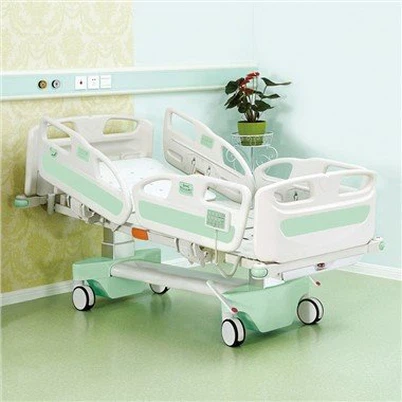
How to properly adjust and maintain the safe height of the hospital bed
Leave a message
Bed height refers to the vertical distance from the floor to the mattress surface of the bed when the bed is in a horizontal position, including the height of the bed frame and the thickness of the mattress. Bed height is considered a risk factor for fall-related injuries and is easily overlooked among ward environmental factors. So how does bed height affect the patient? How should the safe height of hospital beds be determined, adjusted and maintained correctly?
A. The effect of bed height on patients.
1. If the bed is too high, the patient can lift his feet from the bed when getting out of bed, so that the bed is off the ground. Jumping movements tend to increase the risk of falling. In addition, the patient can easily slip off the bed, leading to a fall.
2. If the bed is too low, the patient's buttocks will be too far from the bed surface when sleeping, which will easily cause the patient to sit empty and increase the risk of falling.
B. So how to properly adjust and maintain the safety height of hospital beds?
1. When adjusting the bed height for the patient, the patient can look up the bed and adjust the height of the calf and the bed surface while raising his head.
2. After adjusting the bed height according to the reasonable bed height of 41~53 cm, the patient can feel suitable after sitting.
3. For patients with limited mobility, nurses can also determine the length of their calves first and make reasonable adjustments based on their own reference.
4. In the daily morning and evening nursing and ward rounds, we should preach, observe and adjust the height of the hospital bed. I believe that in the process of our continuous explanation, publicity and attention, the safety height of the hospital bed will be known, valued and maintained by patients and their families.
C. The hospital bed is a more basic and important medical equipment for the patient.
Hospital beds can be divided into electric beds and manual beds according to their functions. However, some studies have pointed out that 42.00% to 60.00% of patients' falls are related to the height of the bed, or they are found to fall at the bedside. However, the height of the hospital bed is easily overlooked by us, so in our daily work, we must help patients to adjust the height of the hospital bed reasonably, educate patients and primary caregivers about fall prevention, and instruct them not to arbitrarily adjust the height of the hospital bed. Height, use the remote control handle and brake of the hospital bed and return to your own position in time to prevent the danger of falling.
Clinical nurses must not unify the bed height for the sake of neatness and beauty in the ward. We must adjust the safety height of the bed reasonably according to the height of the patient, so as to maintain it safely.